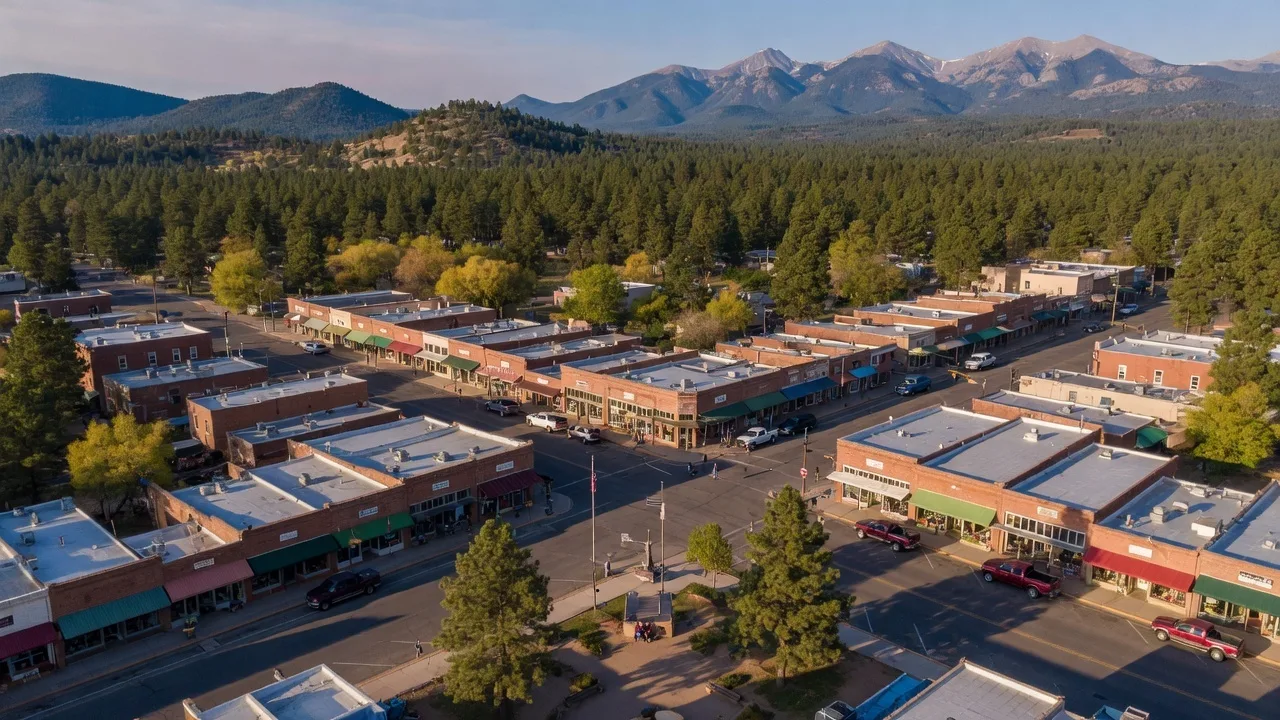
Williams, Arizona's historic business district is experiencing one of the most authentic small-town commercial revivals in the American West. Listed on the National Register of Historic Places since 1984, the four-block corridor along Route 66 (Main Street) is drawing new commercial tenants, hospitality operators, and real estate investors to a downtown that was nearly forgotten after Interstate 40 bypassed it in 1984.
A Living Route 66 Attraction
Unlike many towns along the Mother Road that have faded into quiet nostalgia, Williams has leaned into its Route 66 identity as a living, breathing attraction. Brick sidewalks, period-style streetlights, vintage neon signs, and restored Victorian and Western facades create an atmosphere that draws both tourists and locals to the downtown core.
The commercial buildings along Main Street date from 1897 to 1920, featuring the kind of authentic architectural character that cannot be replicated. For commercial tenants — from coffee shops to galleries to professional offices — this character is a competitive advantage that attracts foot traffic and builds brand identity.
The Bypass That Became a Blessing
When Interstate 40 opened and bypassed Williams in 1984, the town faced an existential economic challenge. But rather than decline, Williams reinvented itself. The community leaned into heritage tourism, leveraging its Route 66 history, its position as the Grand Canyon gateway, and the Grand Canyon Railway to build a tourism economy that now generates more revenue than the original highway traffic ever did.
This transformation turned the historic downtown from a highway corridor into a destination — and that distinction matters for commercial property values.
New Investment in Historic Buildings
Over the past decade, new operators have opened restaurants, breweries, retail shops, and hospitality businesses in restored downtown buildings. The Williams Visitor Center at 200 W Railroad Ave serves as an anchor for visitor engagement, while businesses along the main corridor benefit from both drive-by Route 66 tourists and destination visitors headed to the Grand Canyon Railway, Bearizona, and the Kaibab National Forest.
Properties like 112 & 116 N. 1st St. — located squarely within this revitalization zone — are positioned to benefit from the compounding effect of rising foot traffic, improving streetscapes, and increasing commercial demand.
What This Means for Investors
The Williams downtown revival follows a pattern seen in other small American towns that have successfully leveraged heritage tourism: initial restoration by early adopters, followed by a critical mass of new businesses that creates a self-sustaining commercial ecosystem. Williams appears to have reached that critical mass, with limited available inventory and strong demand from both commercial tenants and the residential market that supports them.
For investors, the message is clear: historic downtown Williams offers a rare combination of current income stability and appreciation potential, wrapped in the kind of authentic character that attracts both tenants and customers.